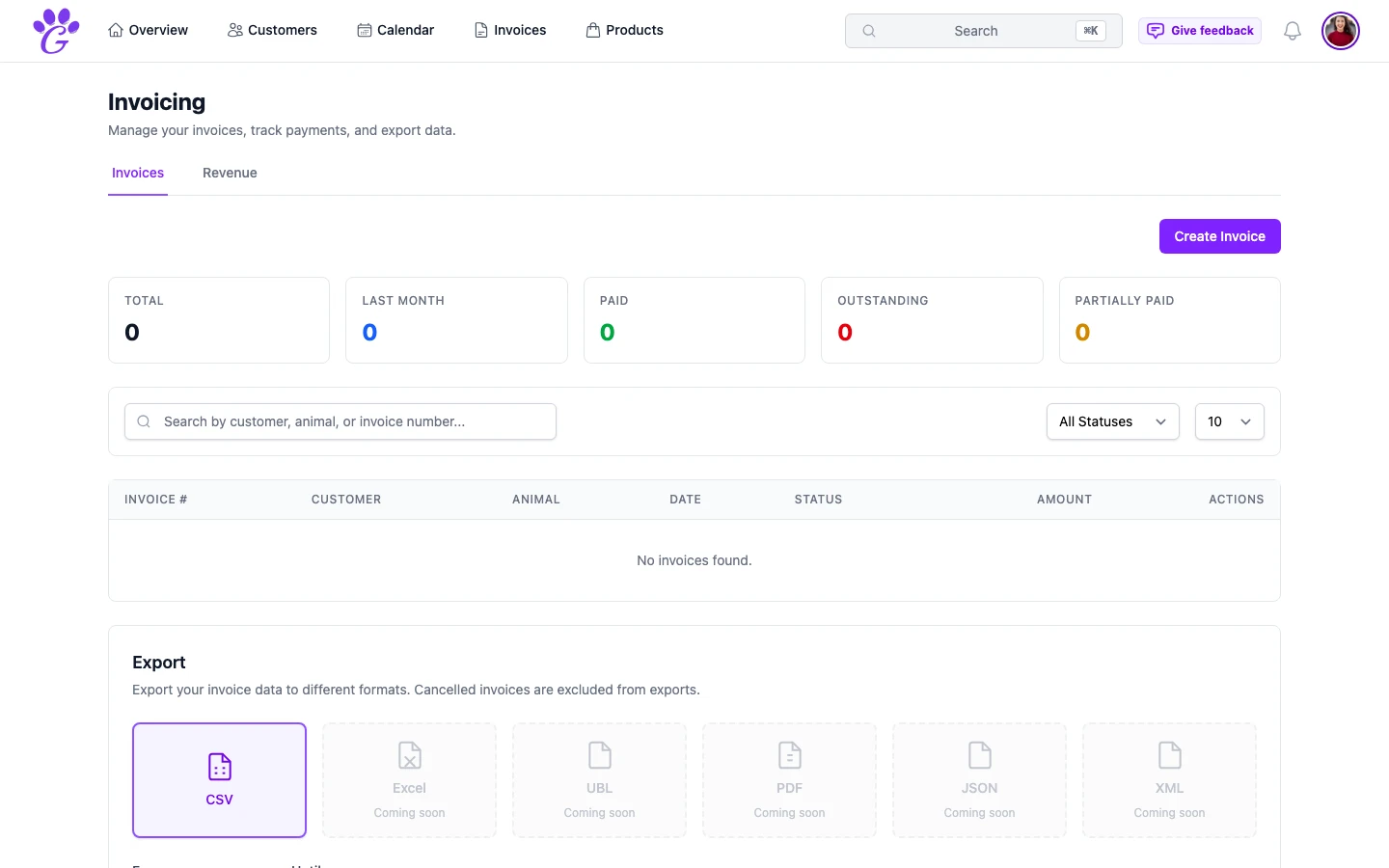
Product Catalog - Track Every Shampoo, Blade and Tool
A product catalog built for grooming salons. Stock levels, low-stock warnings, supplier info, and stock that updates when you add products to an appointment.
Running out of a critical product mid-groom is every groomer's small nightmare. The deshedding shampoo you use for a specific client's allergy-prone Labrador. The size 10 blade that's been getting blunt for a week. The styptic powder that only gets checked when someone nicks a nail. These things are rarely forgotten; they're just rarely tracked until they're missed.
A product catalog won't prevent every out-of-stock moment, but it removes most of them. The goal isn't inventory perfection; it's enough visibility that you reorder a week before you actually need to, instead of three days after.
What is the product catalog in GroomSome?
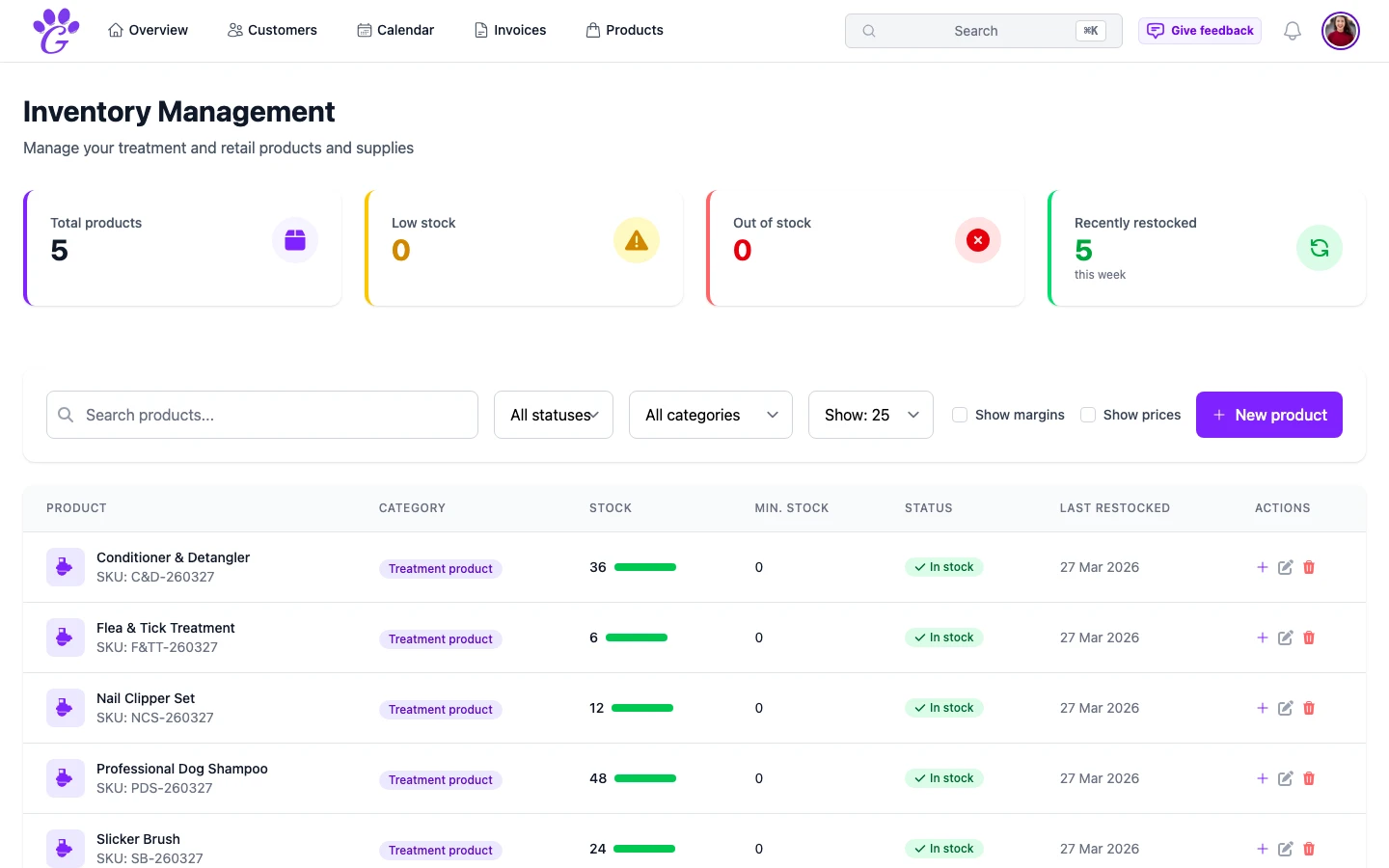
The product catalog is a structured list of everything you buy, use, and resell in the salon: shampoos, conditioners, colognes, blades, scissors, accessories. Each product carries a price, an article number, a supplier and a current stock level.
You can add a product by hand or import a whole list from a file. Once it's in, adding it to an appointment lowers the stock automatically. When a product drops below the minimum you set, GroomSome flags it on your dashboard and products page, well before the day you run out.
Why a product catalog matters for groomers
The value isn't just "don't run out". It's that over a year, a proper catalog makes the business visibly more professional: to your accountant, your suppliers, and yourself.
- Stop panicked ordering. Low-stock warnings give you a week's heads-up, not a day's.
- See your cost of goods. For every grooming service, what's the actual product cost per dog? The catalog has the answer.
- Identify shrinkage. A bottle of cologne "disappears" every week. The catalog shows that. Usually it's a product nobody added to the appointment, but sometimes it's not.
- Faster reordering. Supplier info on each product means the next order is a two-minute email, not a scramble.
- Resale tracking. If you sell products to clients (brush, cologne, ear cleaner), the catalog holds the sales price and margin, and each sale lands on the invoice; often a quietly significant income line.
- Annual stock check. An annual inventory is a couple of hours with a list and a counter, not a weekend with a clipboard.
Key capabilities
- Product creation and management: add, edit, archive without losing history.
- Product import from file: CSV or Excel upload for an existing list.
- Pricing per product: cost, resale price, margin.
- Article number / SKU: for stock management and supplier orders.
- Supplier information: name and contact details, plus the last restock date per product.
- Stock level monitoring: stock goes down automatically when you add a product to an appointment.
- Low-stock warnings: a minimum level per product; GroomSome flags what's running low on your dashboard and products page.
- Inventory value calculation: total stock value for accounting and insurance.
How to get started
A perfect catalog is not the goal; a working one is. Most salons have a usable setup within an afternoon.
- List your top 20 products. The ones you actually use weekly. Don't try to catalog every product you've ever bought.
- Add supplier info for the items you reorder regularly.
- Set a low-stock threshold per product. A rule of thumb: enough for ten working days.
- Add products to appointments. Even for services where the product cost is "small"; over a year, "small" adds up.
- Check weekly. Five minutes on a Monday. Reorder anything on the low-stock list.
Resale as a quiet income line
Many salons give away products they should be selling. If a client loves the cologne you use, selling them a bottle at a margin is not commerce-first; it's service. A proper catalog makes that easy:
- Product listed with a resale price.
- Add it to the appointment, one line.
- Stock decrements automatically.
- The sale shows up in your revenue once you invoice it.
After six months of selling to 20% of regulars, resale often pays for the software and more.
Inventory is not the glamorous part of grooming. But it's where a surprising amount of money quietly leaks. A list of what you have, what you paid, what you sold, and when you need to reorder: it's a small discipline that replaces a lot of small crises. A Friday afternoon with no unnecessary supply drama is a better Friday afternoon.