Breed-Specific Pricing - Fair Prices for Every Breed
Different breeds mean different time, tools and products. GroomSome's breed-specific pricing gives every dog an accurate quote and every invoice a fair total.
A Chihuahua bath is not the same job as a Goldendoodle full groom. Everybody in the trade knows this, and yet a surprising number of salons still price with a single "small / medium / large" scale, or worse, with one number for "a groom". The result is entirely predictable: short-haired breeds get a fair deal, long-haired breeds get a silent discount, and the groomer quietly loses money on exactly the dogs that take the most time.
Breed-specific pricing isn't a premium feature; it's how grooming pricing actually works in real salons. The software's job is to make it painless to maintain and automatic to apply.
What is breed-specific pricing in GroomSome?
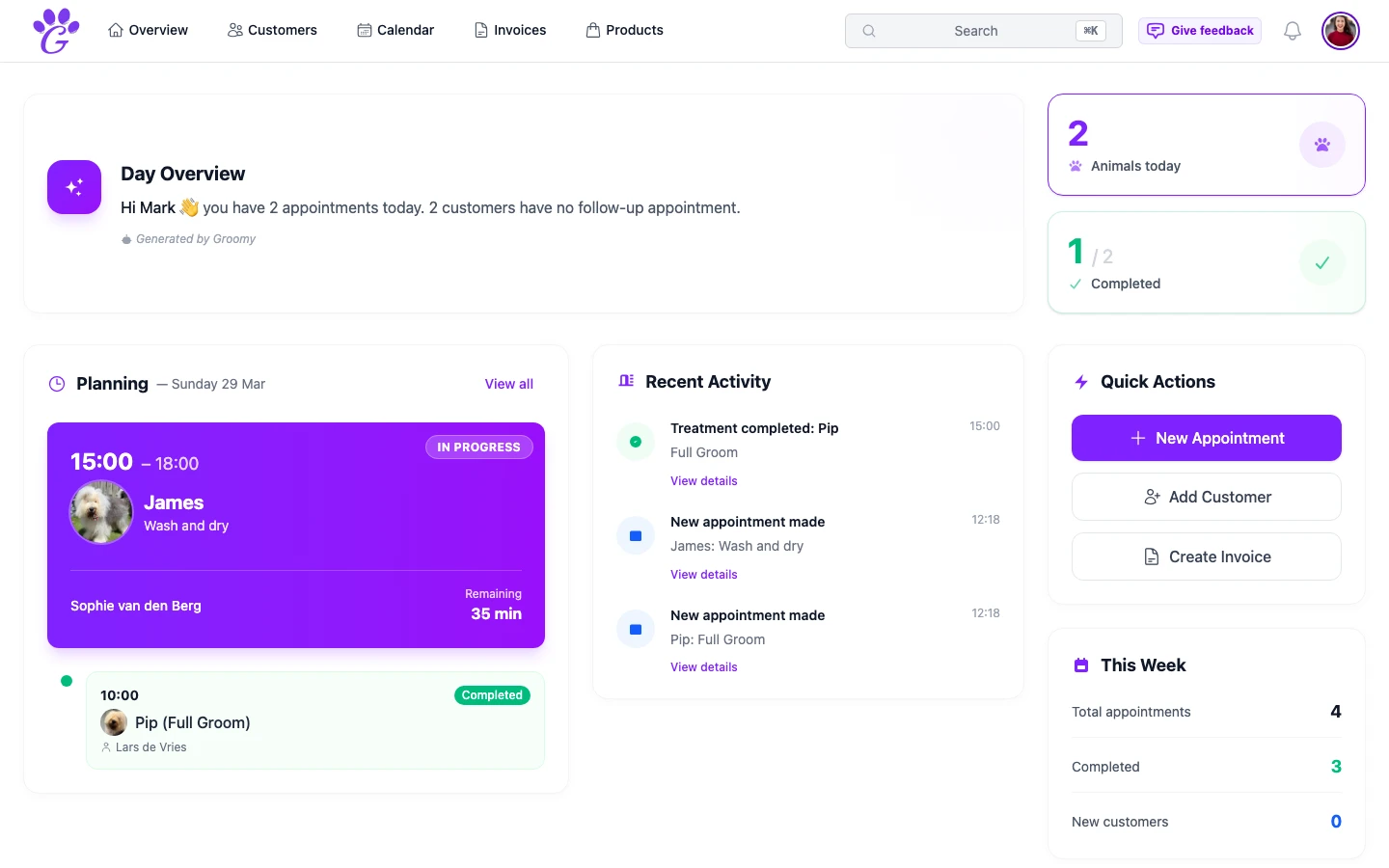
Breed-specific pricing is a layered price list: a default hourly rate or fixed price, optional prices per specific breed, and fixed-price extras. For each appointment, GroomSome suggests a price based on the dog's breed and, with an hourly rate, the length of the appointment, so quotes and invoices match the work involved.
You can import the price list from a CSV, so the initial setup doesn't mean typing hundreds of breeds by hand. Breeds are matched against a structured breed list with autocomplete, which means "Goldendoodle" and "Golden Doodle" don't become two separate rows.
Why breed-specific pricing matters for groomers
The moment your price list tells the truth about which dogs take longer, three things happen in the business: revenue rises, the worst-fit clients self-select, and you stop apologising for your rates.
- No more unpaid time. The difference between 45 minutes and 2 hours of grooming is not a small rounding; it's nearly the whole day's difference for solo groomers.
- Transparent quoting. When a client asks what the groom will cost, you quote the same breed price every time. No surprise increases at pickup.
- Consistency across the team. Every groomer on your team quotes the same number for the same breed. No one is accidentally undercutting.
- Fair relative to effort. A Shih Tzu doesn't subsidise a Bichon, and a Jack Russell doesn't overpay compared to a Doodle.
- Evidence for annual reviews. When you raise prices, you can raise them per breed where the cost actually moved, not across the board.
Key capabilities
- Default rate: an hourly rate or a fixed price that applies to every breed without its own price.
- Breed-specific prices: the breeds that don't fit your default get their own hourly rate or fixed price.
- Suggested price per appointment: worked out from the pet's breed and the appointment length, so you confirm a price instead of calculating one.
- Price import via CSV: load an existing list without retyping.
- Breed matching and validation: catches duplicates and typos during import.
- Default rate as a fallback: a breed without its own price uses your default rate, and the breed price overview shows which breeds are on it.
- Treatment pricing: add-ons (teeth, nails, de-matting) price consistently regardless of breed.
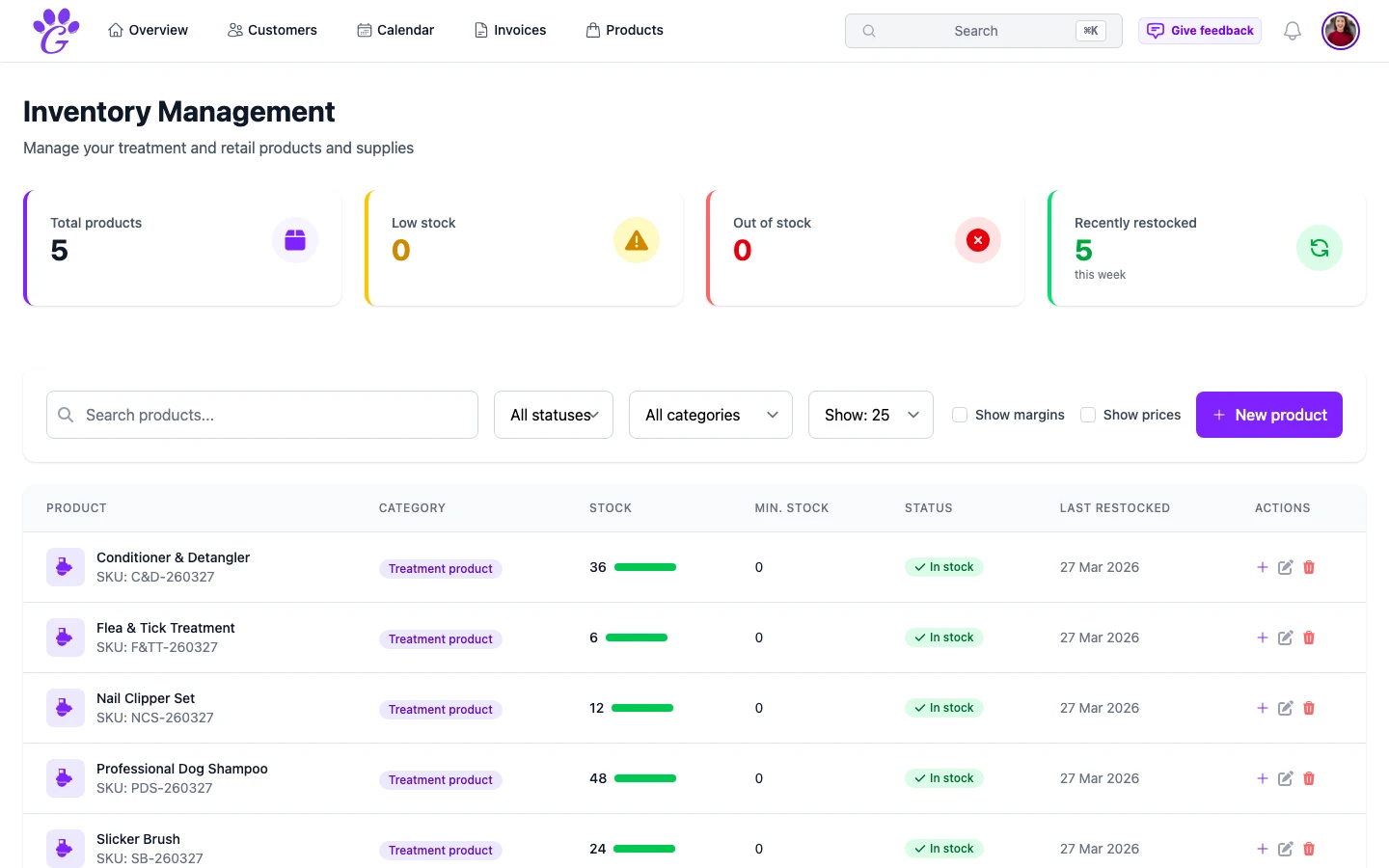
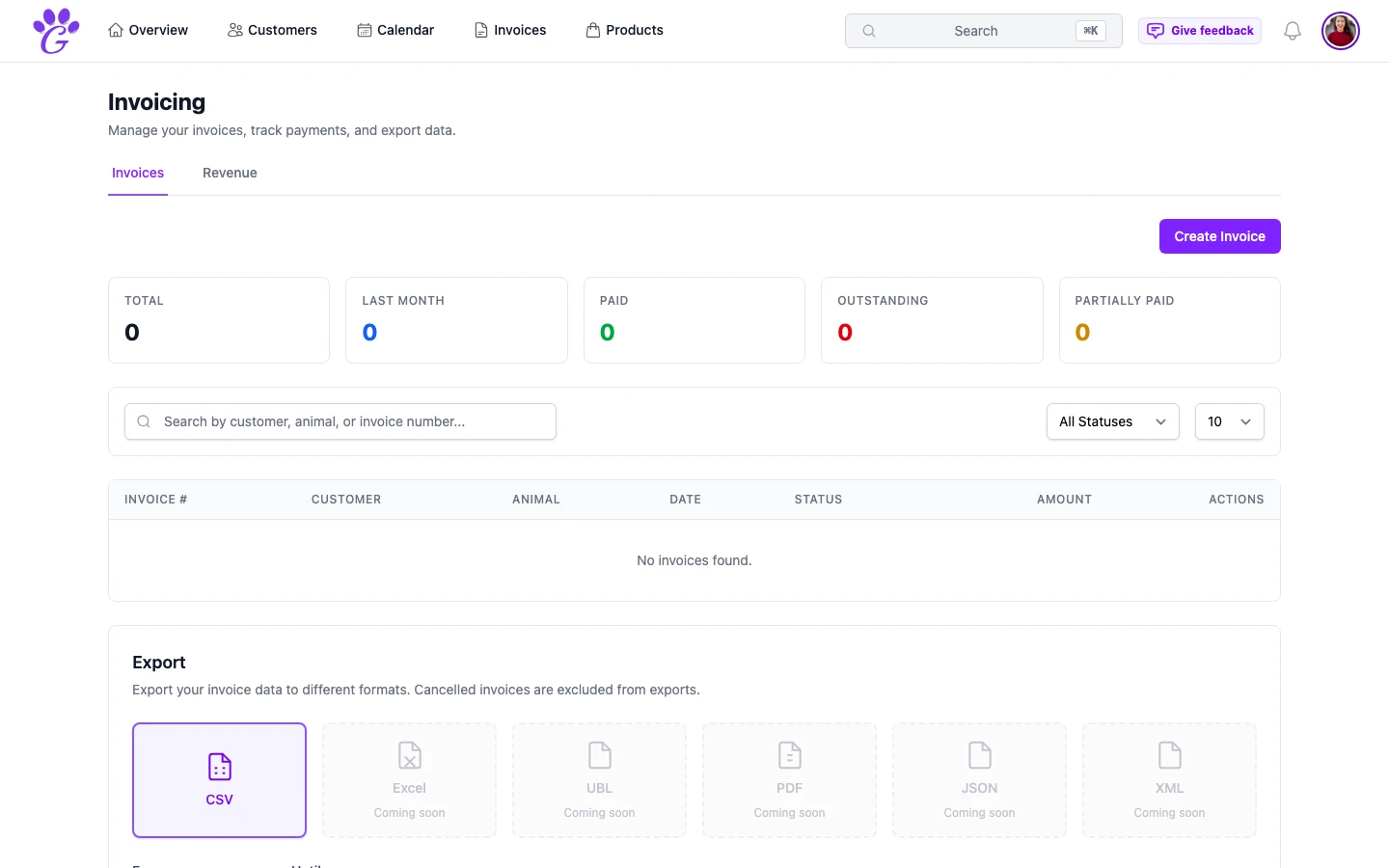
- Integration with invoices: once you confirm an appointment's price, the invoice is built from it; no re-entering.
How to get started
You don't need a perfect list on day one. Most salons start with their top ten breeds and expand from there.
- List your most common services: full groom, bath and tidy, hand-strip, puppy intro.
- Decide how you charge. An hourly rate or fixed prices, plus your own price for the breeds that take noticeably longer.
- Enter your regulars first. The ten breeds you see most often; the long tail fills in as new clients come.
- Import the rest via CSV if you already have a digital price list. Five minutes of setup.
- Review annually. Not monthly, not never; once a year, with real data behind the changes.
Breed-specific pricing is what turns a price list from a polite suggestion into an accurate reflection of the work. The moment your rates match the reality of which dogs take longer, the dogs that cost you money become the dogs that pay for themselves, and the conversation with clients stops being apologetic.