Payment Tracking - Never Lose Track of Who Paid
Payment status per appointment and per invoice. Outstanding balance visible at a glance. Aging analysis so nothing slips through.
"Did that client already pay?" is one of those questions every salon owner asks themselves at least once a week. A dog was groomed, an invoice went out, maybe cash changed hands, maybe it didn't. The client left, you moved on, and two weeks later you're not sure. Meanwhile the money might be sitting quietly in outstanding balance, or might have been paid in cash and never recorded.
Payment tracking isn't about chasing clients. It's about keeping your own awareness clean: knowing what's paid, what's outstanding, and what needs a gentle nudge, without having to reconstruct it from memory.
What is payment tracking in GroomSome?
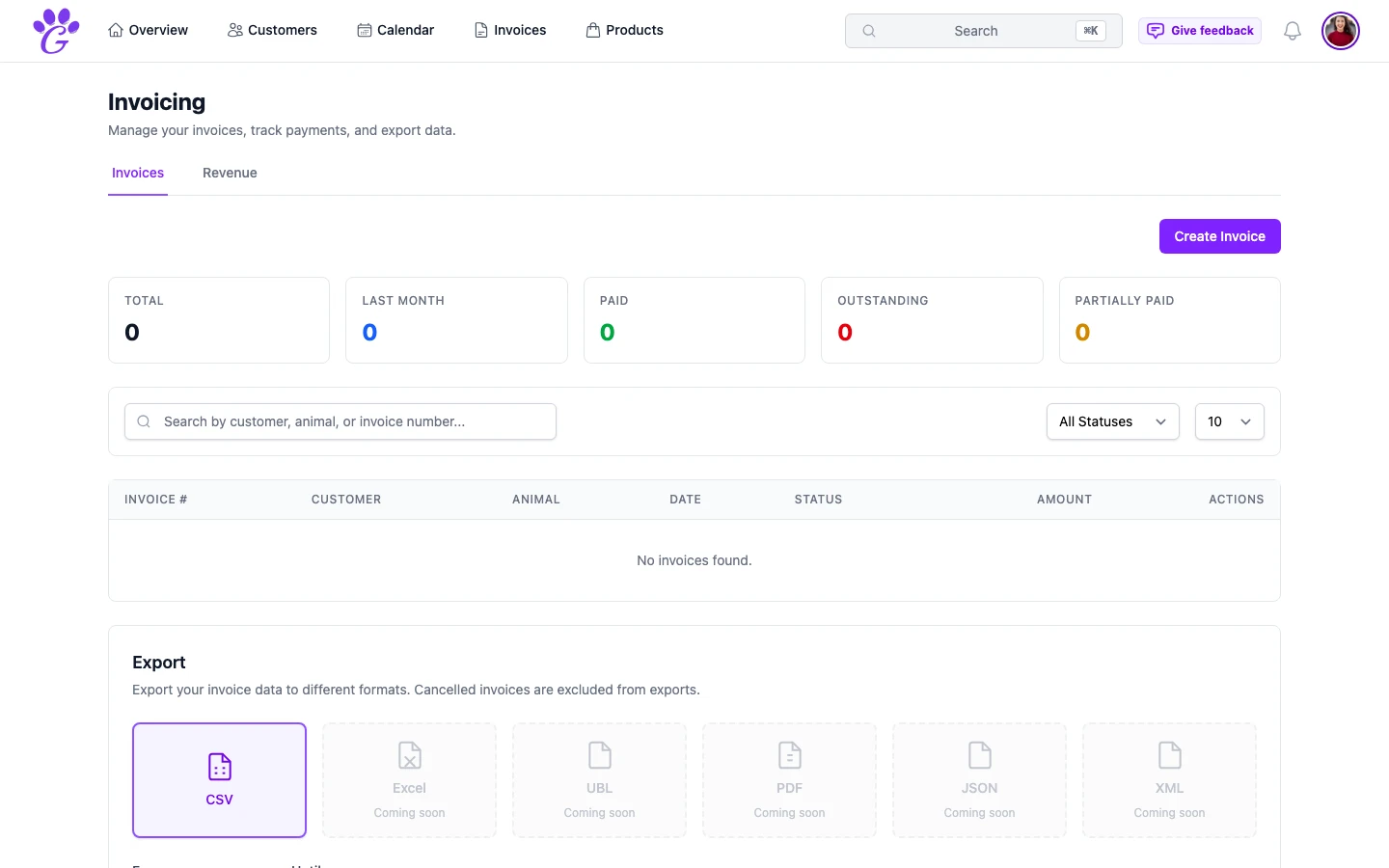
Payment tracking is the set of statuses and views that show, for every appointment and every invoice, whether money has come in. Each invoice carries a status (draft, sent, paid, partially paid, cancelled) and each appointment inherits a payment state from its invoice. The revenue overview shows how much is outstanding across all clients.
You mark invoices paid the moment the money arrives (cash, card, bank transfer, doesn't matter). The overview updates straight away. The outstanding list shrinks as you go, and if something is genuinely overdue, it's visible by age, not buried.
Why payment tracking matters for groomers
Most groomers don't have a cashflow problem. They have a visibility problem. The money is often there; they just can't always see it.
- Stop double-asking. A client says they already paid last week, and you can't remember. You check the invoice, see the status, and respond with certainty.
- Catch unpaid-at-pickup. It happens: a client left without paying, you were distracted, the invoice is still "sent". A quick check the next morning is much easier than catching it three weeks later.
- Partial payments stay visible. A client pays half at pickup and half on transfer. Mark the invoice partially paid and it stays on your list until the rest comes in.
- Aging analysis. Overdue by 30 days is different from overdue by 90. A list sorted by age tells you where to focus, and what to write off.
- No awkward chasing. A gentle reminder email to "you might have missed this invoice" is professional. Phoning four weeks later because you noticed by accident is not.
- Better accountant relationship. A clean paid-vs-outstanding register makes quarterly reviews quick.
Key capabilities
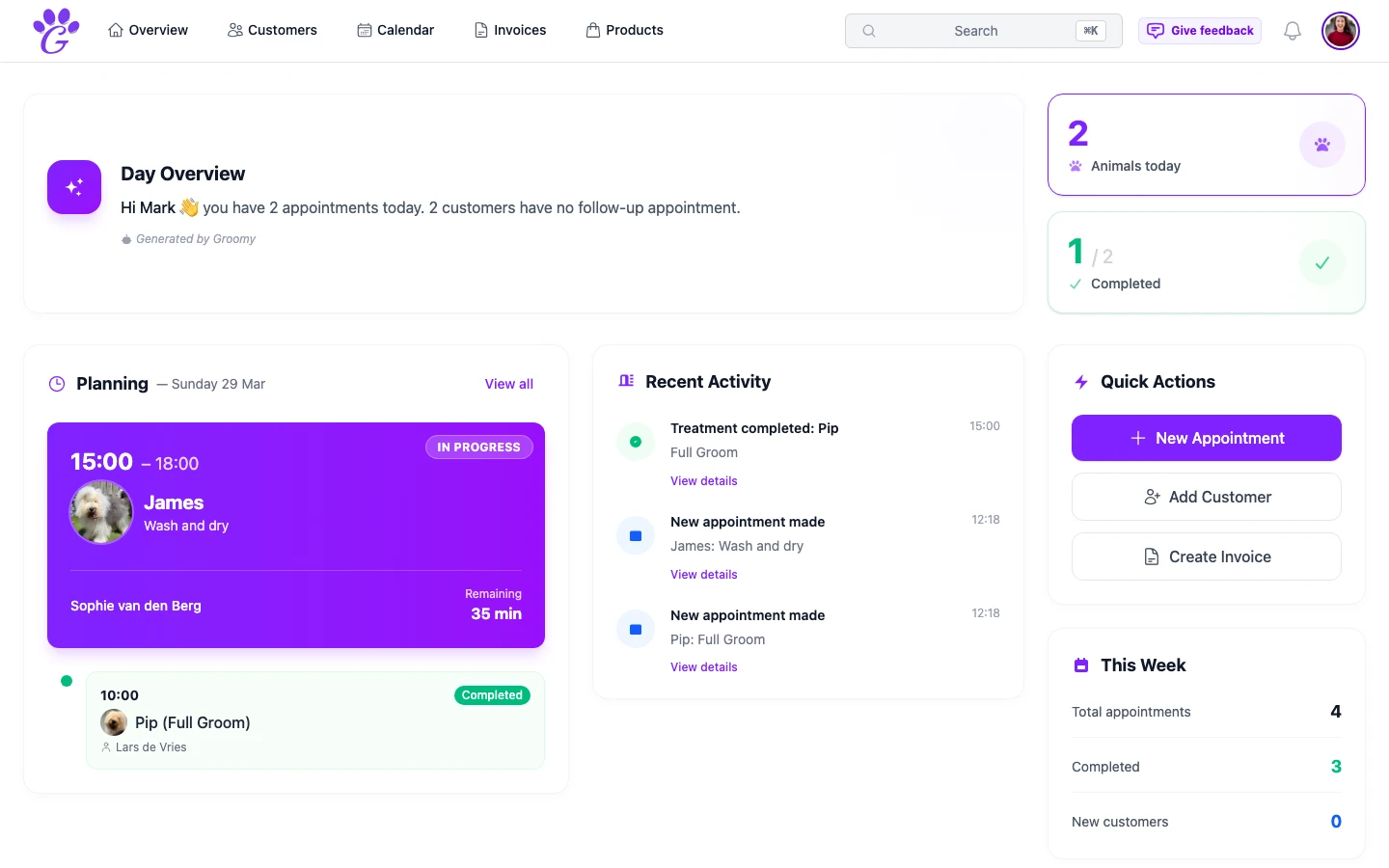
- Payment status per appointment: paid, unpaid, partially paid, follows the invoice.
- Payment status per invoice: draft, sent, paid, partially paid, cancelled.
- Outstanding amount in the revenue overview: the total across all customers, by status.
- Aging analysis: outstanding invoices grouped into 0–30, 31–60 and 60+ days.
- Partially paid status: mark an invoice partially paid and it stays on the outstanding list.
- Payment date: record when each payment arrived, useful for reconciliation.
- Per-customer outstanding: see which customers have a balance, quickly.
- Reconciliation-friendly: export your invoices by date range and check them against your bank statement.
How to run a payment-tracking rhythm
Tracking only works if it fits into the day. The rhythm that works for most salons is simple.
- Mark paid at the point of sale. Cash paid at pickup? Tap paid on the invoice before the client leaves. Card paid? Same.
- Daily bank check. Once a day, end of the afternoon, open the bank app and mark matching transfers paid in GroomSome. Five minutes.
- Friday review. Look at outstanding balance every Friday. Anything 14 days old gets a gentle reminder.
- Monthly reconciliation. First of the month, reconcile GroomSome against the bank. Any discrepancy is fresh and easy to fix.
Dealing with overdue
Even with clean tracking, some invoices age. A few practical rules:
- 14 days. First reminder. Friendly, short. "Just a quick nudge, invoice #123 is still showing as outstanding, happy to send it again."
- 30 days. Second reminder. Slightly firmer, still friendly. Mention it was due and ask if there's a payment issue.
- 60 days. Phone call. Not email. A real conversation catches a genuine problem faster than another email in the pile.
- 90 days. Decide: continued follow-up, or write off. Sometimes a friendly write-off buys more goodwill than a pointless chase.
- Repeat offenders. Add a note on the customer profile: payment at pickup. No exceptions.
Payment tracking isn't about being strict. It's about being aware. When you know exactly who paid, who hasn't, and how long each invoice has been waiting, you spend less time chasing ghosts and more time on the actual grooming work. The money that was always there becomes the money you can actually see.