How to Keep Track of Pet Allergies and Medical Conditions as a Groomer
Skin allergies, heart conditions, hip dysplasia: the notes that keep groomers and dogs safe. Intake, storage, and visibility before every appointment.
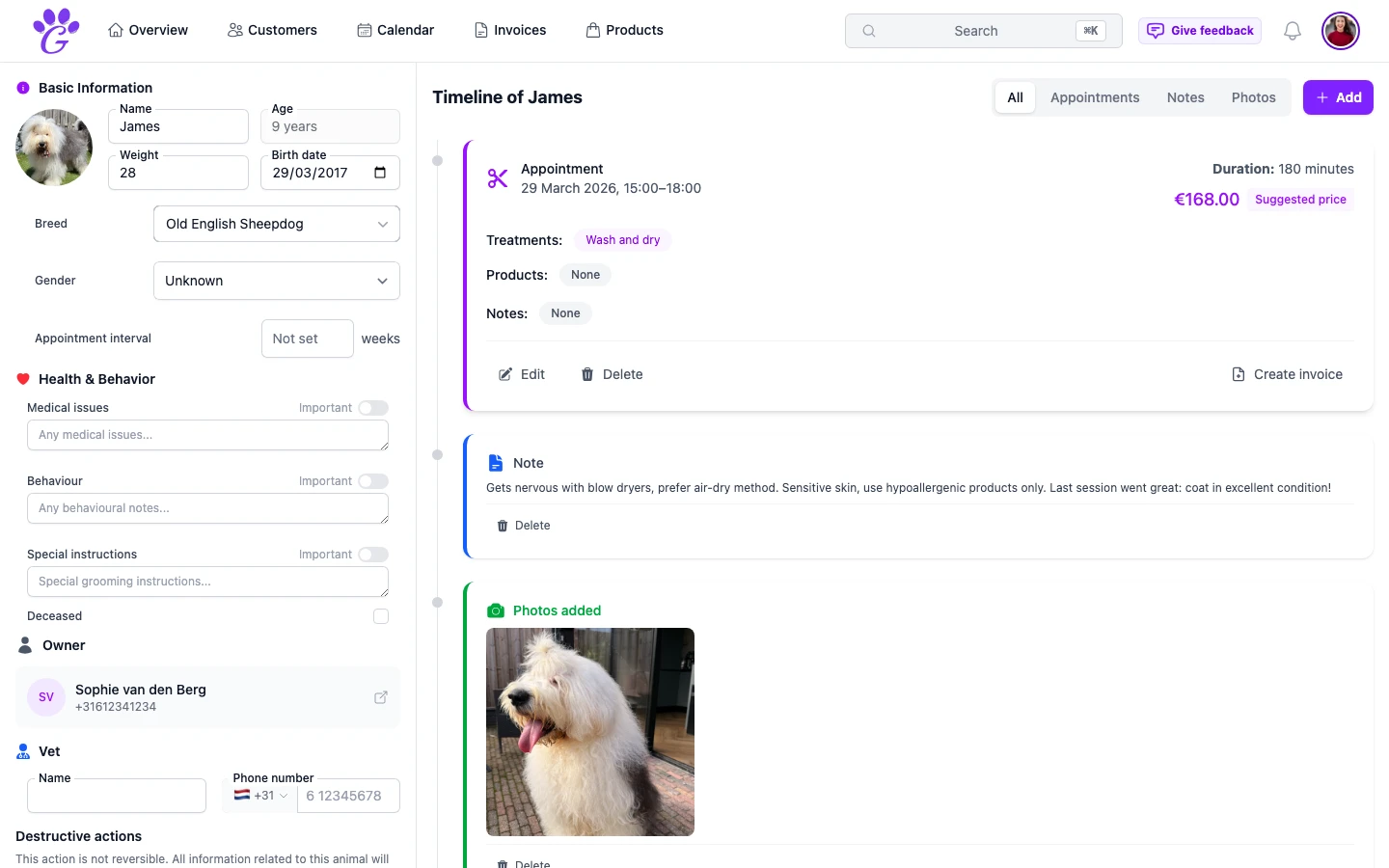
Groomers hold real responsibility for animal welfare. A dog with a skin allergy that gets the wrong shampoo can leave with hot spots that take weeks to settle. A dog with a heart condition put on a high-velocity dryer too long can have a medical emergency on your table. And if an owner didn't mention the condition on the booking call, and you didn't know to ask, it's still your problem.
This isn't about becoming a veterinarian. It's about having a reliable system for capturing what owners tell you, flagging what really matters, and seeing it before every appointment. Grooming medical notes aren't complicated; they're just too easy to lose without structure.
What to ask at intake
A new-client intake shouldn't feel like a doctor's visit, but it should be thorough. Aim for a short, friendly conversation that gathers:
- Breed, age, and weight. The basics.
- Vet contact. Name, phone, and practice. You'd call them before an ambulance if something went wrong.
- Known allergies. Skin, food, or product-specific (shampoos, conditioners).
- Chronic conditions. Heart, hip, arthritis, recent surgery, seizures.
- Medication. What, how often, and whether the dog is under the influence of anything during the appointment.
- Recent vaccinations. Some salons require up-to-date core vaccines.
- Behavioural history. Anxiety, fear of specific tools (clippers, dryers, scissors), past biting or snapping.
Write it down. Don't rely on the phone conversation "sticking in your head". It doesn't, especially not three months later.
What really needs flagging
Some things you need to know; some things you need to know immediately. The difference matters, because a flat wall of notes tends to get skimmed. Use an importance marker.
- Critical flags: heart or cardiac condition, epilepsy, severe product allergies, recent surgery, blood disorders, aggression under stress. These must be visible before the appointment starts. Not on page three of the profile.
- Important flags: skin conditions, hip or joint problems, anxiety with specific tools, food allergies.
- Informational notes: coat preferences, mild grumpiness, specific styling requests. Nice to know; not safety-critical.
A system that colour-codes or bolds critical flags is the one you'll actually notice when you open the profile on a busy morning.
Where to store it
The only reliable place is in the pet profile itself, visible before the appointment. Paper files, a separate spreadsheet, or a note on the dog's folder that's only checked sometimes: none of those are good enough. A proper grooming system keeps the medical and behavioural notes on the pet record itself, with the critical ones flagged so they stand out the moment you open it.
When to see it
The timing matters. Reading a medical flag after you've already put the dog on the table is too late.
- Before you call the dog up. A 20-second check of the profile from the dashboard takes less time than answering a phone call.
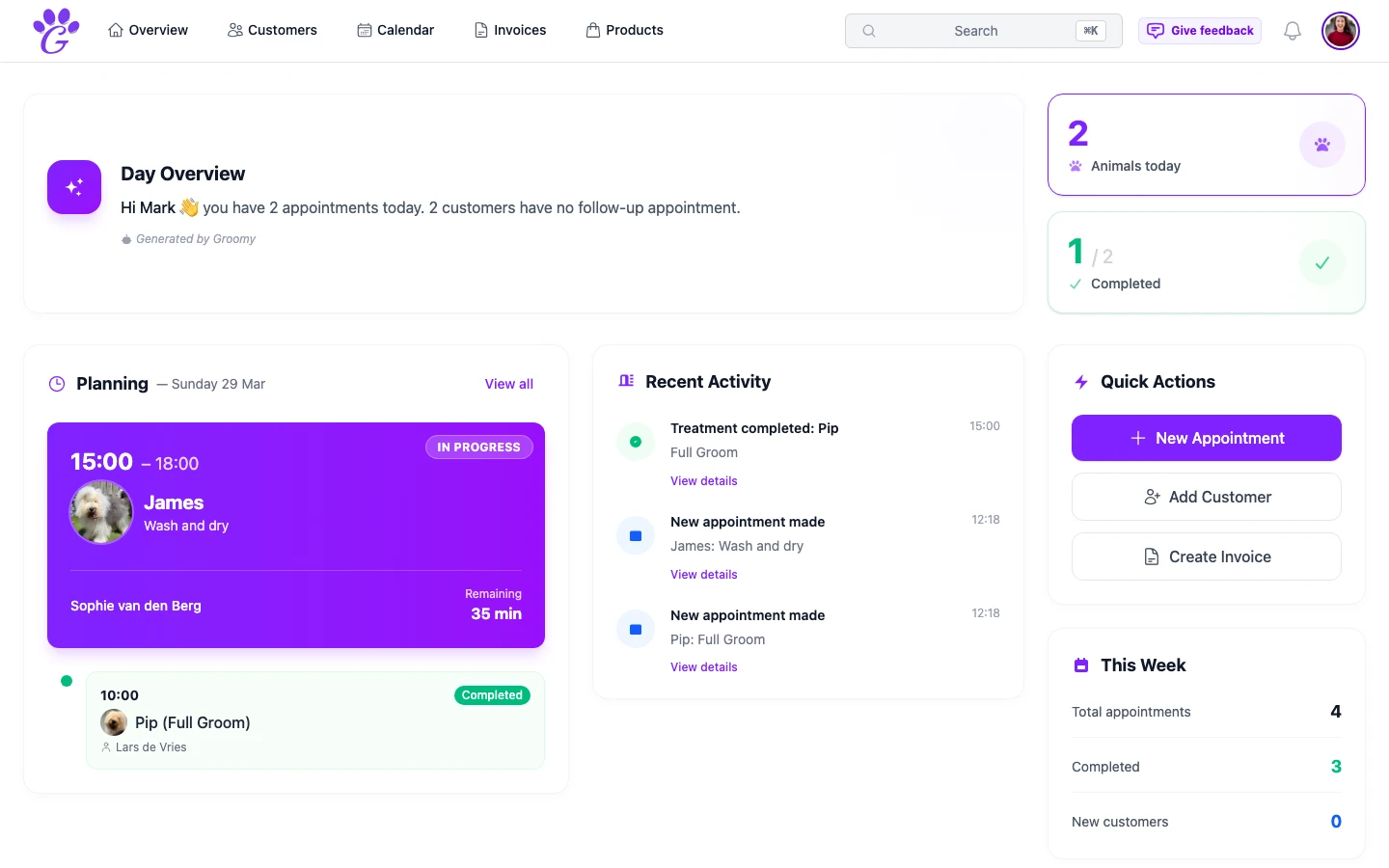
- When you plan the day. A quick look through today's dogs should tell you which ones need extra attention.
- Whenever the client asks a question. "Last time, did I mention Bella's meds?" The answer should be two seconds away.
- On handoff to a colleague. If you're not the one grooming today, the next person reads the flags without needing your memory.
What to do when you see a red flag
A flag doesn't mean "refuse the dog". It means "adjust the plan".
- Confirm the information with the owner at drop-off. Situations change, medications change, allergies evolve.
- Decide which products and tools to avoid. A dog with a product allergy gets a hypoallergenic shampoo, not the usual.
- Adjust the pace. A dog with a heart condition doesn't get rushed. Plan a longer slot.
- Have the vet's number to hand. Not because you expect to call, but because if you do, seconds matter.
- If in doubt, defer. Some dogs should have been groomed at the vet's office, not at yours. Saying "we can't do this safely today" protects everyone.
Updating notes over time
Medical conditions are moving targets. A flag written a year ago may no longer apply; a new one may have emerged. A few practical habits:
- Ask at every appointment. "Anything new since last time?" A two-second question that catches a lot.
- Update immediately. If a client mentions a new medication at drop-off, write it before the dog is on the table.
- Archive, don't delete. A resolved condition should stay visible in history, not disappear.
- Annual vet-info refresh. Once a year, confirm the vet details are current.
Why groomers who do this well stand out
Owners know. A groomer who can say "I saw on Bella's record that she's on steroid meds for allergies; are we still avoiding the blueberry shampoo?" is a groomer who keeps clients for life. The reverse (a groomer who gets the shampoo wrong because nobody checked) is the one who loses a client, possibly publicly.
Medical tracking isn't about being paranoid. It's about giving yourself the information you need to do the job safely and confidently. A good system makes that easy, and what was once the scariest part of grooming becomes one of the things you're quietly best at.