Pet Profiles - Complete History for Every Animal
Breed, weight, medical notes, behaviour flags and grooming preferences in one place. GroomSome's pet profiles make every appointment safer.
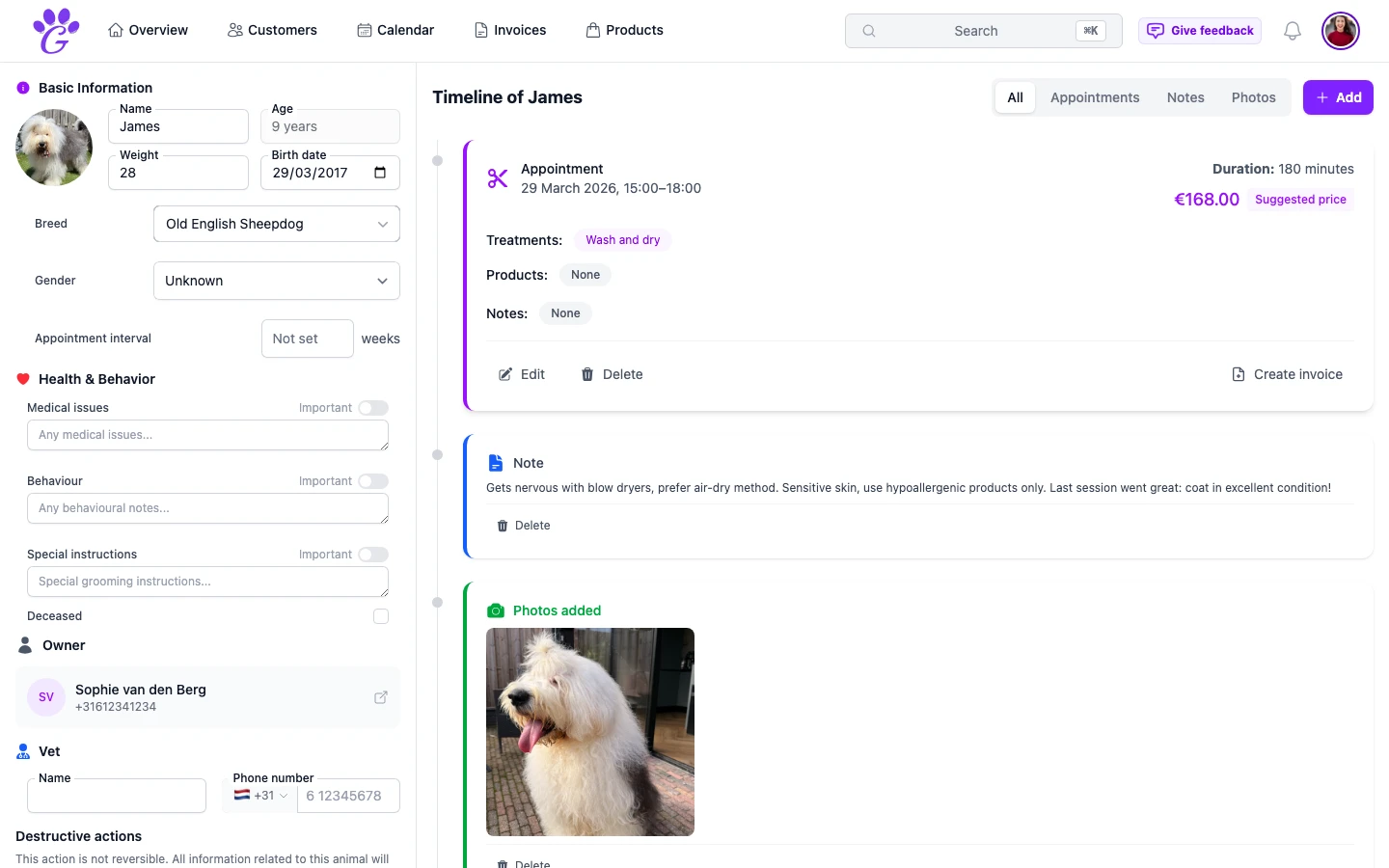
A Goldendoodle comes in for a full groom. The owner forgot to mention it, but last time the dog flinched at the clippers and had to be muzzled halfway through. You wouldn't know that from looking at the booking, and by the time you find out, you've already started. A profile that remembers those details is what turns a risky moment into a routine one.
Most groomers end up keeping these things in their head, in a notebook, or on scraps of paper taped to a locker. It works until it doesn't. Pet profiles are how you move that knowledge out of your head and into a system that loads every time the dog walks in.
What are pet profiles in GroomSome?
A pet profile is the full record of one animal: breed, weight, age, medical notes, behavioural flags, grooming preferences, and the history of every visit. Each profile is linked to its owner, so you can jump from customer to pet and back without losing your place.
You can add a photo so the right dog is matched to the right profile, useful when a family has three Cockers called Max, Maxi, and Maxine. Breed is an autocomplete field, so you don't have to worry about spelling. Weight, age, and birth date are there too, because a ten-year-old Shih Tzu isn't groomed the same way as a two-year-old one.
Why pet profiles matter for groomers
Knowing the dog before the appointment is the difference between a safe groom and a stressful one. Every profile carries the notes that keep both the dog and the groomer out of trouble.
- Medical flags where you can see them. Heart conditions, skin allergies, hip dysplasia: the kind of thing you absolutely need to know before picking up a blade. Important items show a visible flag so they don't get lost.
- Behavioural notes. Dogs that don't like the dryer, dogs that bite when their paws are touched, dogs that need a quiet area. When you read this first, you plan the groom differently.
- Grooming preferences. Length, style, products to avoid, the scissor cut the owner always asks for. The dog leaves looking how the owner expects, every time.
- Appointment interval. Set how often the dog should come in ("every 6 weeks") and plan the next visit in one tap.
- Safer for new team members. A groomer who's never met the dog can read the profile in 30 seconds and work like they've known it for a year.
Key capabilities
- Profile photo: so there's no confusion when three dogs in one family share similar names.
- Breed autocomplete: pick from a structured list; avoids spelling drift like "Goldendoodle" vs "Golden Doodle".
- Weight, age, birth date: the basics that matter for product choice and grooming time.
- Gender and neutered status: relevant for certain skin and coat conditions.
- Medical issues with importance flags: mild notes stay in the background; critical ones stand out.
- Behavioural issues: the dog's temperament in your own words.
- Special grooming instructions: styles, clipper lengths, products the dog reacts to.
- Appointment interval: 1 to 52 weeks, with a one-tap way to plan the next appointment.
- Linked history: every past appointment, photo, and note attached to this one pet.
How to get started
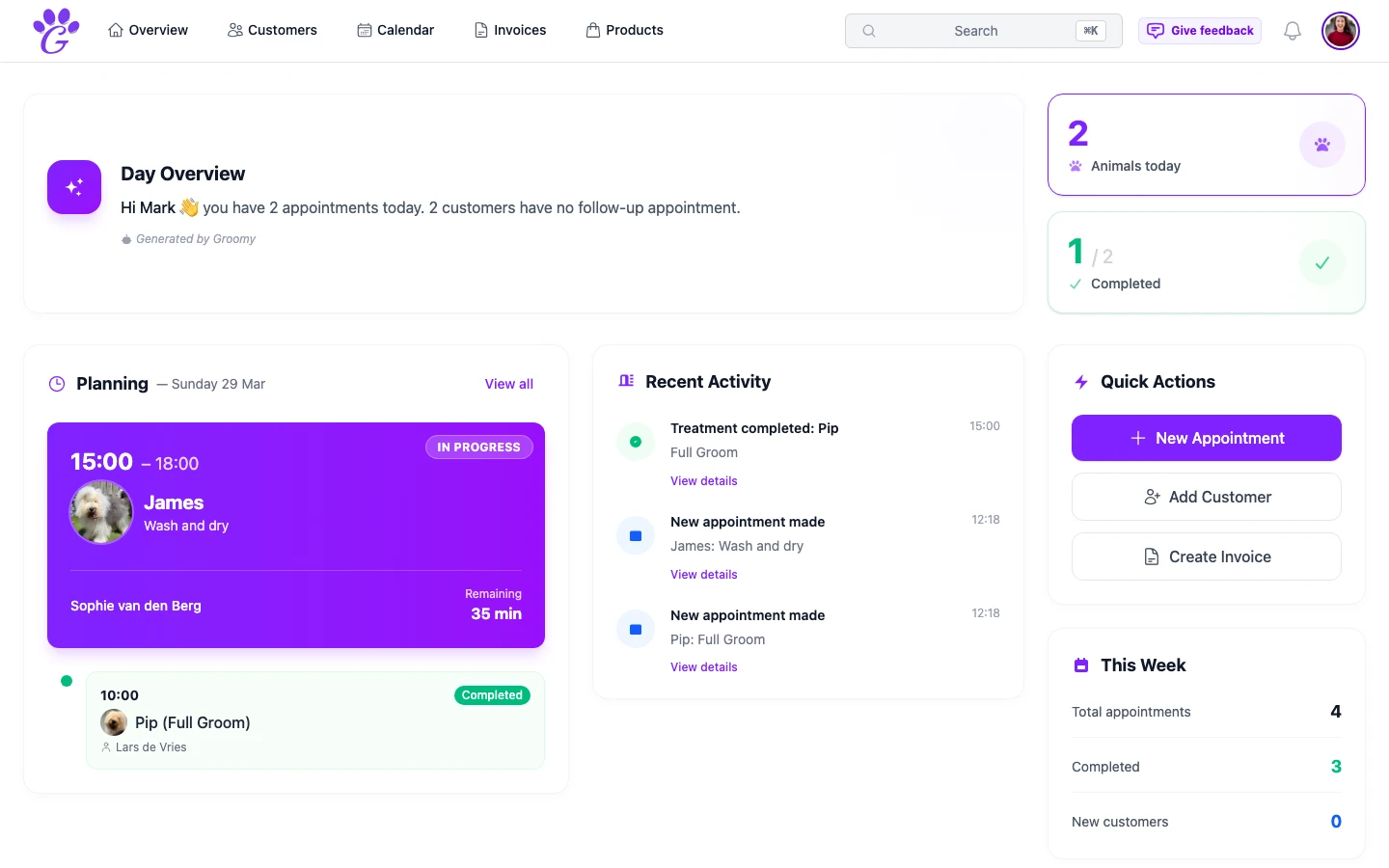
Pet profiles fill up naturally as appointments happen. You don't need to sit down on a Sunday and type out every dog.
- Capture the essentials the first time: breed, weight, age. Enough to know what you're working with.
- Add medical and behavioural notes as the dog shows you. The first appointment teaches you something; write it down before you forget.
- Flag the critical stuff: allergies, heart conditions, aggression under stress. Use the importance flag so it can't be missed.
- Set the appointment interval the client prefers, so planning the next visit takes one tap.
Once the profile exists, every future appointment, invoice, photo, and note attaches automatically. The first groom is where you gather information; every one after that is where you use it.
The best grooms aren't the ones that go perfectly by accident; they're the ones that start with a two-minute read of the pet's profile. When safety, style, and temperament are already in your hands before the dog walks in, the rest of the day gets a lot easier.