Spring Shedding Season - How to Handle the Busiest Time of Year
The April–May shedding rush: longer appointments, heavier coats, double-coated breeds, and how to schedule without running yourself into the ground.
Every groomer knows the moment: a Thursday in early April, you bring a Husky in for what should be a "tidy", and two hours later you're still pulling clumps of undercoat. Spring shedding season is the quiet second peak of the year: quieter because it's not tied to a holiday, but often longer and more physically demanding than December.
Double-coated breeds, long-haired rescues, Goldens, Labs, and the endless stream of doodles come out of winter with coats that need more than a routine groom. If your calendar treats every dog like it's January, spring runs over you. A little adjustment in scheduling, pricing, and communication turns the season from exhausting to lucrative.
What makes spring different
The work is fundamentally different to most of the year:
- Longer appointments. A deshedding groom on a Husky or Malamute can easily be 2.5 to 3 hours. Block accordingly.
- More prep time. Hand-stripping, carding, and undercoat removal take longer than standard clipper work.
- More mess. You'll vacuum more, change more towels, and dry more frequently. Small additions to the day, but they compound.
- More products used. Deshedding shampoo, conditioner, high-velocity dryer time; all more intensive.
- Tired groomers. Two hours of brushing out an undercoat is genuinely tiring. Plan for it.
Schedule differently
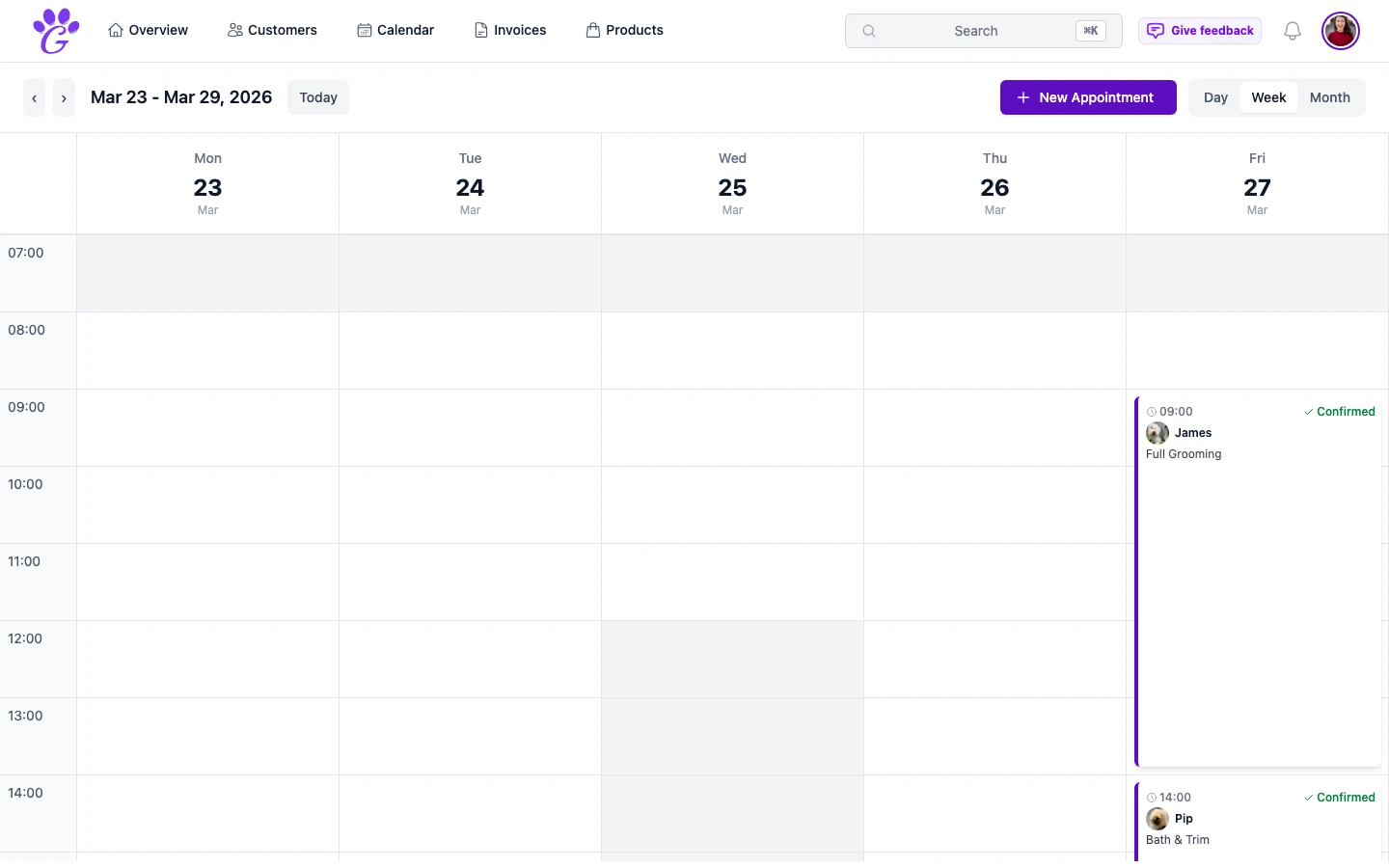
Trying to fit spring appointments into your regular calendar is where most salons crack. The fix is scheduling to match the work.
- Longer slots for known double-coated breeds. If your system has breed-based durations, check they're set correctly for spring. A Husky isn't a small full groom.
- Fewer dogs per day. Instead of six dogs, you're doing four. Revenue stays similar or higher because each appointment is bigger.
- Buffer between appointments. Ten minutes of vacuuming and re-setting doesn't fit into the overlap.
- One or two "buffer slots" per day. Unbooked time to absorb anything that runs over.
- Morning-only days for the heaviest dogs. A Malamute at 9am is a different experience to a Malamute at 4pm on a tired day.
Price for the work
If your prices don't reflect the extra time and product, you're subsidising spring.
- Charge an explicit deshedding surcharge for double-coated breeds, or price the appointment by actual time.
- Consider a "spring special" that's full priced. Package it as a package (bath, deshed, blow-out, nail trim) at a fair premium.
- Flag de-matting vs deshedding. These are different jobs and deserve different prices.
- Review prices before April. A mid-season price change is awkward; a February review is normal.
Communicate with clients
A short, warm message to regulars in March saves a lot of "surprise, this took longer and cost more" moments in April.
"Hi everyone, spring shedding is nearly here. Our deshedding appointments take longer than regular grooms, so we'd love to get you booked early. Prices for double-coated breeds reflect the extra time; let us know if you have questions."
Not defensive, not apologetic: informational. Clients who know what to expect don't push back.
Which breeds to watch
Not all dogs need a spring adjustment. The ones that do:
- Huskies, Malamutes, Samoyeds. The classic heavy-undercoat breeds.
- Golden Retrievers, Labs, Newfoundlands. Double-coated; easy to underestimate.
- German Shepherds. Serious blow-out twice a year.
- Collies (rough and smooth). More coat than they look.
- Bernese, St Bernards. Longer slots essential.
- Double-coated mixed breeds. Always ask at intake.
Single-coated breeds (Poodles, Doodles, Yorkies, Bichons) don't need a spring-specific scheduling change. Their appointments are closer to normal.
What clients forget
A few things to mention gently:
- Their dog will leave lighter. Visibly. Clients are sometimes shocked at how much was in there.
- Home brushing matters. Even a couple of minutes with a slicker between appointments prevents matting.
- The interval between grooms matters in spring. A dog due every ten weeks might need six in April–May.
- Deshedding is a process, not a single visit. Some heavy-coated dogs benefit from two shorter sessions two weeks apart.
Protecting yourself physically
The honest part that's rarely discussed: deshedding hurts. Wrist, shoulders, back. A season of it can cause real injury.
- Take breaks between long appointments. Even five minutes of stretching counts.
- Rotate tasks. Don't do three Huskies in a row. Alternate with a quick bath or a puppy intro.
- Use the right tools. A properly sharp undercoat rake or stripping knife saves your wrist significantly.
- Keep Wednesday afternoons lighter. Or whichever is your rest point. The week can't be all heavy days.
- Consider an extra day off in spring. Better to take it up front than to burn out in May.
Spring shedding season is a real opportunity. Done well, it's one of the highest-revenue months of the year, and one where clients most appreciate a skilled groomer. Done poorly, it runs you over. The difference is mostly scheduling and pricing, set up before April starts, holding firm through the wave.