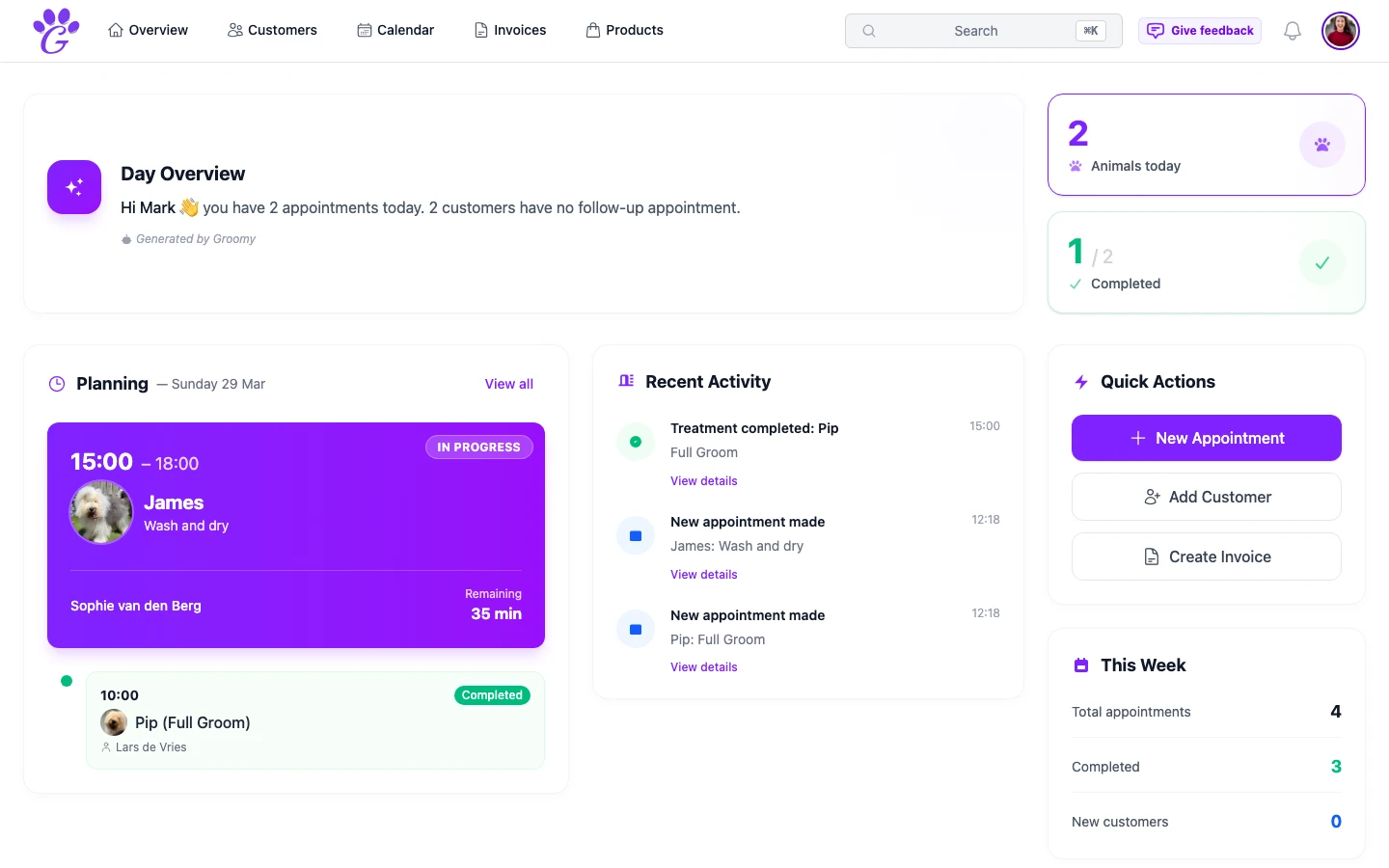
Preparing Your Grooming Salon for the Holiday Rush
November and December are the busiest months for groomers. A practical plan: hours, waitlists, pricing, reminders, and how to stay sane.
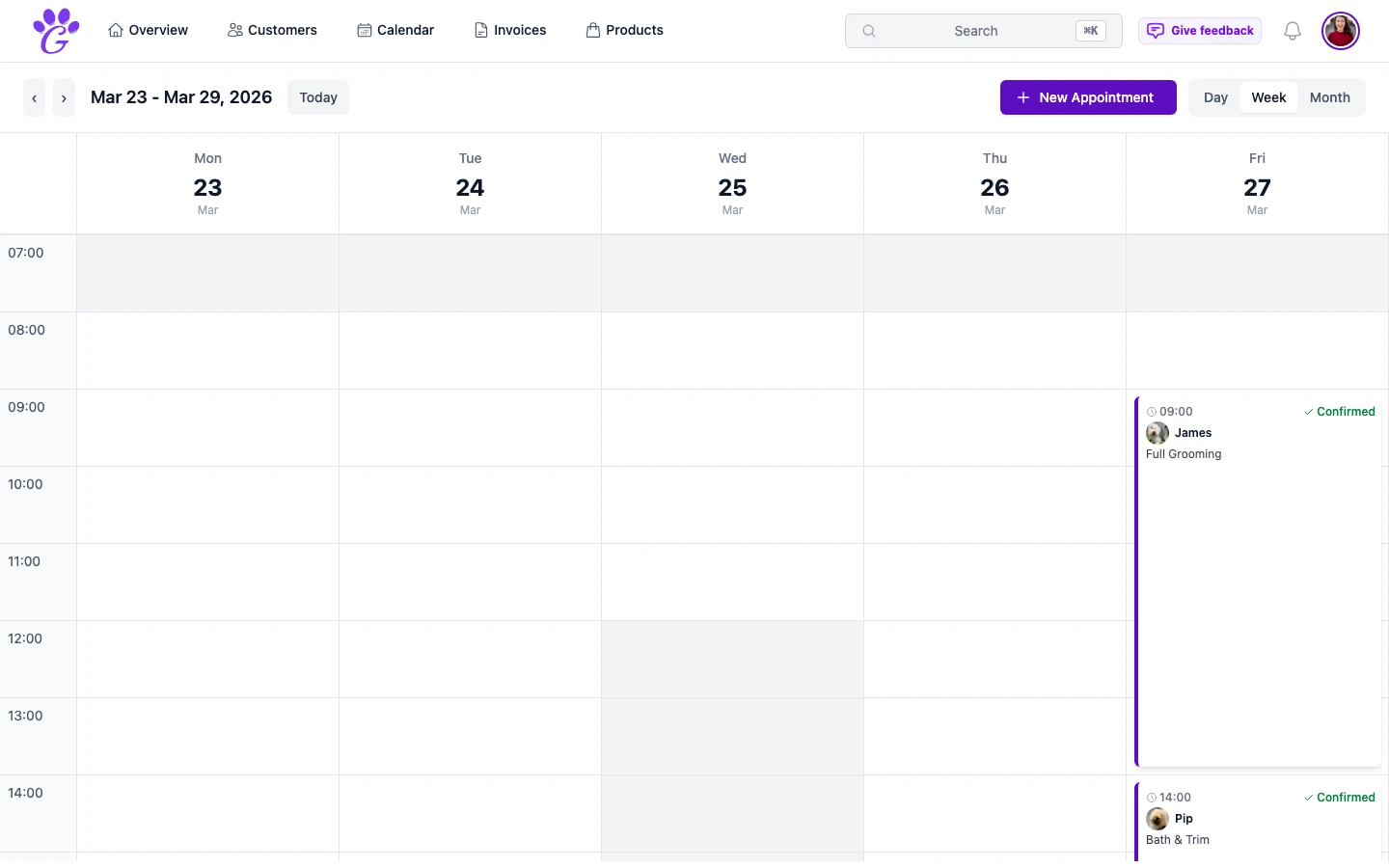
Every groomer knows this time of year. From mid-November onwards, phones ring earlier, clients want their dog looking good for family photos, and Christmas Eve is the hardest day of the year to close on time. The holiday rush is rarely about more dogs overall; it's about the same dogs, compressed into a narrower window, plus a few "can you squeeze us in?" requests.
A busy December pays the bills of February and March. But only if you arrive at New Year's Eve still in one piece. The goal isn't to do more; it's to do the same work calmly, without running over every day and without burning out in week three.
Start with a plan, not a hope
Two hours, mid-October, is enough.
- Decide your capacity. How many dogs per day realistically, not optimistically. Solo groomers often overbook by 20% in December and pay for it in stress.
- Decide your opening hours. Extending hours is fine if it's decided in advance. It's brutal if it's decided on the fly at 9pm on a Thursday.
- Block your rest. A day off in mid-December is worth two in January. Put it on the calendar now and hold it.
- Identify your top 20 clients. They deserve first choice on their regular slot. Email them in October.
- Set a booking deadline for new clients. "Last available Christmas slot: December 18" on your website and social channels saves a lot of disappointed calls.
Open the schedule on time
Most grooming salons leave December bookings until regulars start asking. The better play is the opposite.
- Email regulars in late October with a list of open slots. "Book your December appointment by Nov 15 to guarantee your usual time."
- Open online booking early. By mid-November at the latest. Even a non-regular online booker fills slots you would have had to fill manually anyway.
- Hold back some slots. Keep 1–2 per day unbooked until the week itself, as a buffer for matted emergencies and loyal clients who forgot.
Use a waitlist
Once you're full, you're full. But a waitlist turns cancellations into revenue instead of empty slots.
- A simple note per week: "waitlist for this week".
- When someone cancels, the list is already ready.
- Prefer clients who are flexible on time; they're the easiest to fit in.
- Message everyone on the list with the open slot, first response wins. Not "dibs", not "I'll check my calendar".
Pricing during peak
Most salons don't surcharge for the holiday season. That's fine. But do:
- Hold your normal price. Don't quietly discount regulars to fit them in.
- Reserve early-morning and late-evening slots for a small premium if you're extending hours. These are a different shape of day for you.
- Use a deposit for new clients at peak times. Reduces no-shows when the schedule can least afford them.
Reminders are non-negotiable in December
If reminders aren't on, turn them on now. If they are, double-check the timing.
- A reminder 24 hours before.
- In each client's language: Dutch or English, set on their customer record.
- With a polite mention of the no-show policy in the body.
A single no-show in December is not "a missed €50". It's the empty slot that could have absorbed a waitlist client, which now goes nowhere.
Buffer time, protected
The week between Christmas and New Year is when the wheels come off most salons. Not because it's too busy (it's usually the opposite) but because everyone is tired.
- Shorter days around Christmas. Half-day on the 23rd. Off from the 24th to the 27th. Full days from the 28th.
- Avoid over-promising. If someone asks for Christmas Eve afternoon, it's okay to say you're not booking that.
- Block time for yourself. Sleep, walk, rest. A burnt-out groomer in January is a quiet February.
Keep clients calm
The rush is stressful for clients too. A little communication goes a long way.
- A pinned update on your social channels ("fully booked after Dec 18, back from Jan 3") prevents a lot of messages.
- An out-of-office auto-reply on your email from Dec 23 to Jan 2.
- A "thank you" email to regulars in early January. Costs nothing, keeps retention strong.
Use the slow week afterwards
The first two weeks of January are quieter. Resist the temptation to just sit; use them.
- Deep-clean the salon. Everything you couldn't do in December.
- Review the month. Revenue, top services, busiest days. Two hours well spent.
- Follow up on any December no-shows. A friendly message, no pressure. Many rebook.
- Plan the next rush. Easter and spring shedding aren't far behind.
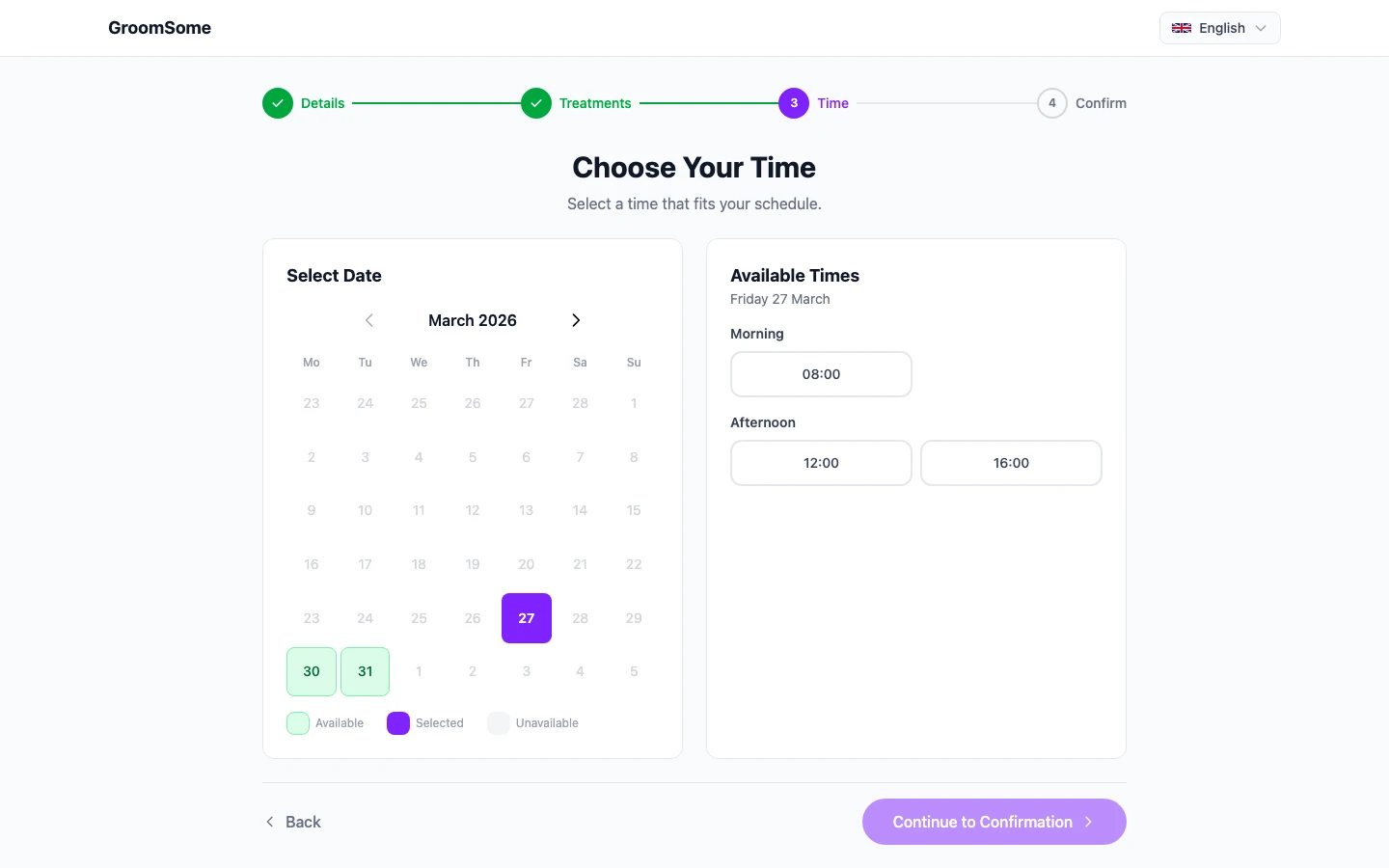
The holiday rush is one of the few times of year that actually tests a grooming business's systems. A clean calendar, active reminders, a booking page that only offers the slots you really have, and a protected week of rest: that's the difference between a December that pays for March and a December that breaks you before January.