How to Reduce No-Shows in Your Grooming Salon
No-shows drain revenue and shake a groomer's day. Practical tactics (policy, deposits, reminders and follow-up) to cut missed appointments.
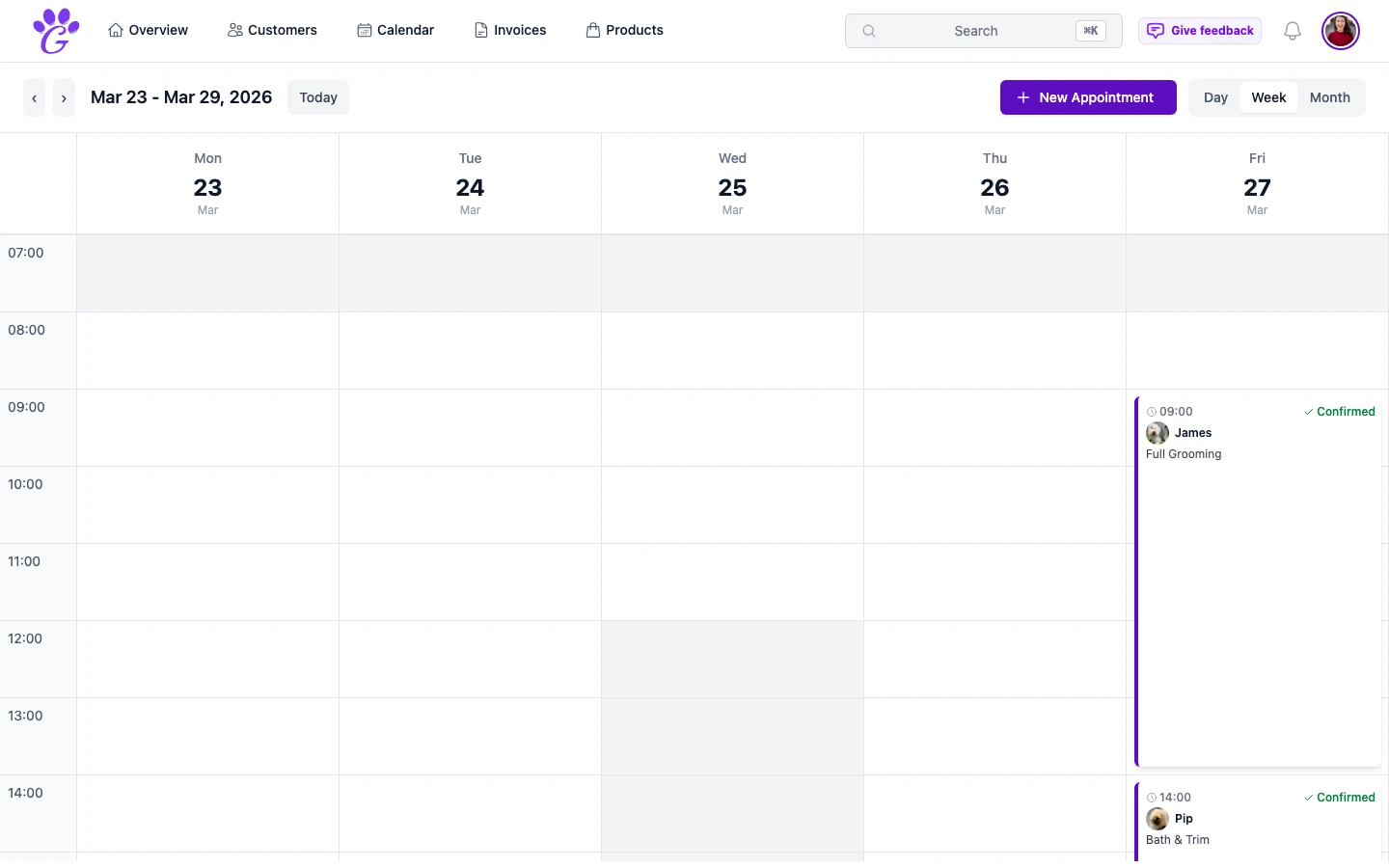
A no-show in a busy grooming salon is more than a missed hour. It's a hole in the middle of your day. You've turned away someone else who wanted that slot, you've prepped the bath area, and the replacement bookings you could have taken have already gone elsewhere. A couple of no-shows a week, week after week, can quietly cost a solo groomer a month's revenue a year.
The good news: most no-shows aren't malicious. Clients forget, clients panic about traffic, clients misremember a date. That means most no-shows are preventable, and a handful of simple habits will cut them dramatically.
Why no-shows happen
Before chasing a fix, it's worth knowing the usual causes. You'll recognise most of them.
- Forgetfulness. The appointment was made six weeks ago. Life happened. The dog is still muddy.
- Unclear policy. The client doesn't know what cancelling "last minute" means to you, or whether there's any cost.
- No reminder in the right channel. A phone message gets lost. An email goes to spam. A text on a different number never arrives.
- Wrong-day confusion. "I thought it was Thursday, not Wednesday."
- Low stakes. If there's no deposit and no policy, cancelling feels free, because to the client, it is.
How much a no-show actually costs
Do a rough calculation. If your average groom is, say, €55 and takes 90 minutes, a single no-show isn't just €55 of missed revenue; it's an hour and a half of idle salon time you can't sell again. Two no-shows a week is €110 weekly, or around €5,500 a year. Enough to fund a second table, a proper shop dryer, or a long holiday.
Strategies that actually work
Any one of these helps. Together, they compound.
- Write down your policy, and share it. A single paragraph on your booking page and in your welcome email: how far in advance you need cancellations, what happens if a client doesn't show, whether you charge a fee. No legalese. Clear, friendly, predictable.
- Send automated reminders. The single biggest lever. A reminder the day before the appointment eliminates 90% of forgetfulness-driven no-shows. Automate it; don't rely on manually texting every client.
- Ask for a deposit on high-risk bookings. Not every client. But for new clients, long appointments (de-matting, hand-strip), or peak slots (Saturday morning), a small deposit reframes the booking in the client's mind.
- Follow up the same day. When someone does miss, a warm same-day message ("we were expecting Bella today; hope everything's alright") is more effective than silence. It shows the appointment mattered, and it opens the door to rebooking.
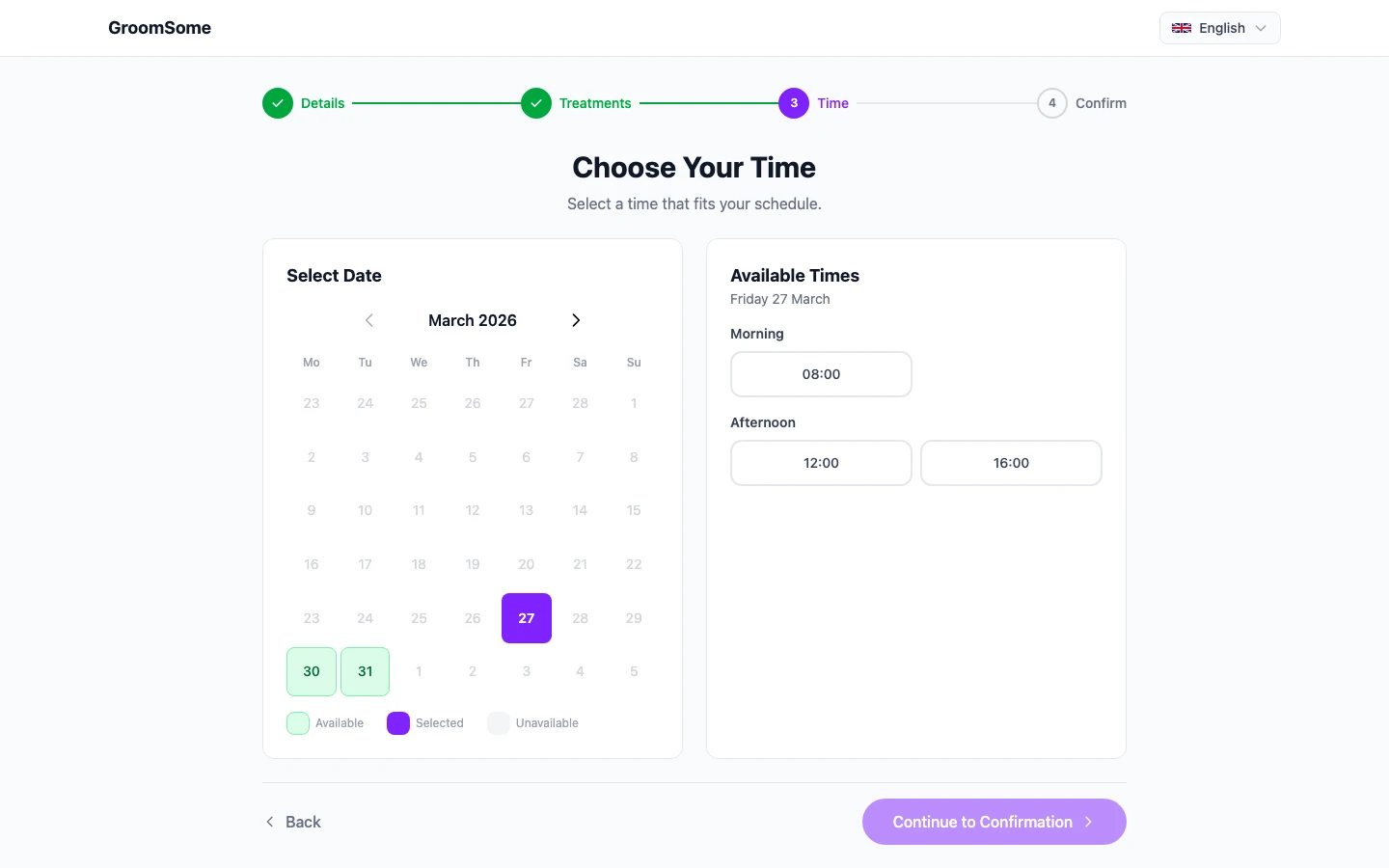
- Make rebooking easy. If cancelling is easier than showing up, you've got a problem. Online booking and a reschedule link in the booking email remove the friction that turns a "can't make it today" into a no-show.
- Flag repeat offenders. Two or three missed appointments from the same client is a pattern, not bad luck. A private note on the customer record ("deposit required" or "24-hour confirmation") protects your schedule without damaging the relationship.
How reminders fit in
If you only change one thing, make it reminders. A reminder shouldn't rely on you remembering to send it. A good scheduling tool sends reminders automatically, in the client's language, at a lead time you choose (a day before, two days before, a week before). You never touch it after setup, and your no-show rate drops the first week.
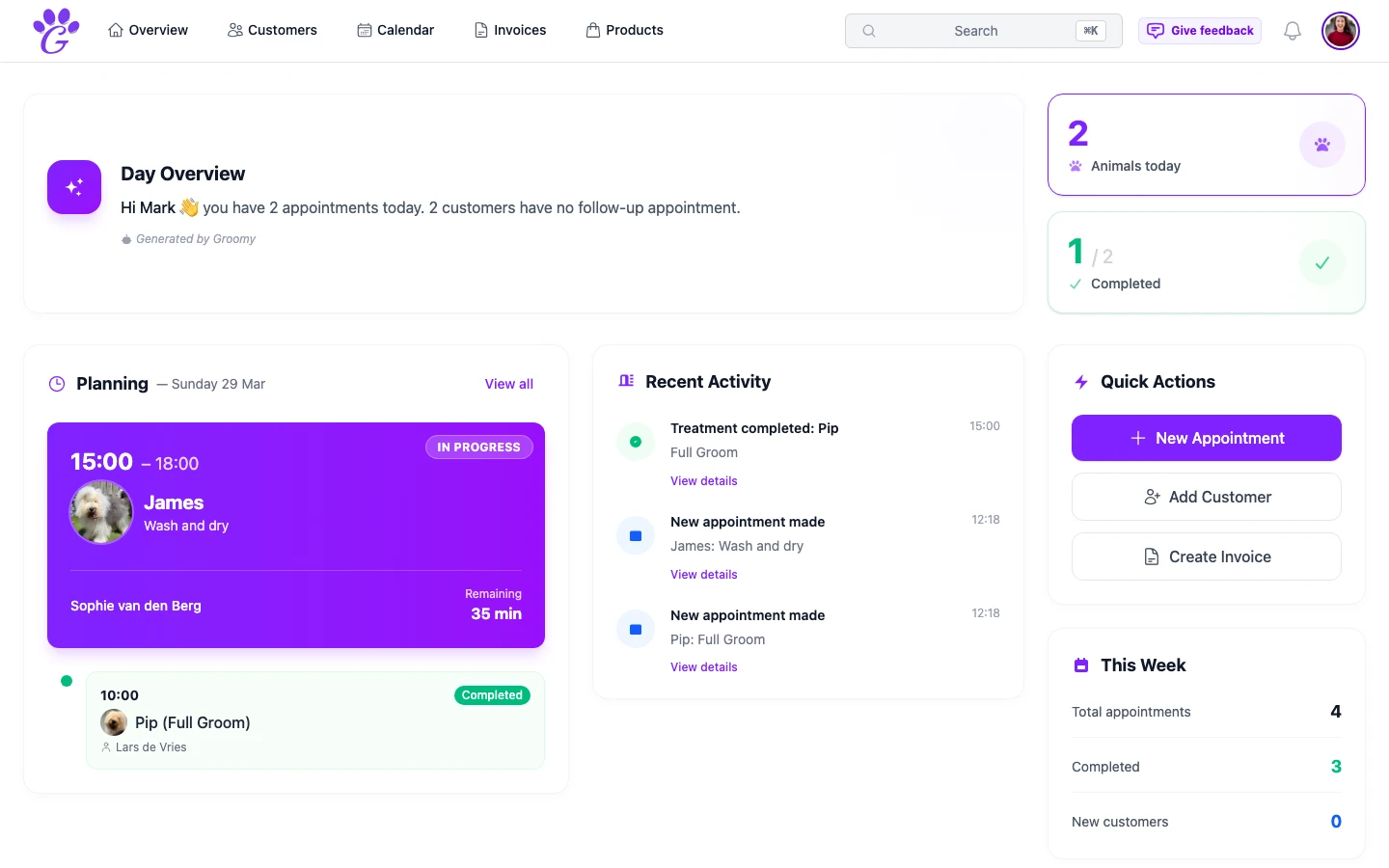
GroomSome handles this out of the box: email reminders included, SMS reminders as a paid add-on, with templates in 7 languages and Dutch or English set per customer. Combined with a clear policy and a deposit on your trickiest bookings, this is where the big drop in no-shows usually comes from.
Putting it into practice
You don't need a big project. Start with the two changes that take the least effort and give the most back:
- Write your cancellation policy this week. One paragraph. Put it on your booking page, your website, and your welcome email.
- Turn on automated reminders. One the day before. Leave the rest as it is for now.
Track your no-show rate for a month. Most groomers see a visible drop after the first reminder cycle alone.
No-shows will never be zero. Dogs get sick, cars break down, weddings get moved. But the difference between a week full of surprises and a week that mostly runs to plan is almost always the small stuff: a clear policy, a timely reminder, and a warm follow-up. That's where the month's missing revenue is hiding.